Types of Asbestos & Talc Contamination — What You Need to Know
Introduction
Asbestos is not a single substance. It is a group of six naturally occurring mineral fibers, all of which are classified as known human carcinogens and all of which can cause mesothelioma, lung cancer, and other serious diseases. Understanding which type of asbestos you were exposed to, and where that exposure occurred, can matter for your legal claim, including which asbestos trust funds you may be eligible to file against.
This page also covers a related and increasingly important issue: talc products contaminated with asbestos. Talc and asbestos are often found in the same geological deposits, and for decades, talc used in consumer products, including baby powder, was not consistently tested for asbestos contamination. If you or a family member developed mesothelioma or ovarian cancer after using talc-based products, you may have a claim separate from a workplace exposure case. See our Connecticut asbestos exposure sites page for information on workplace exposure specifically.
The Six Types of Asbestos
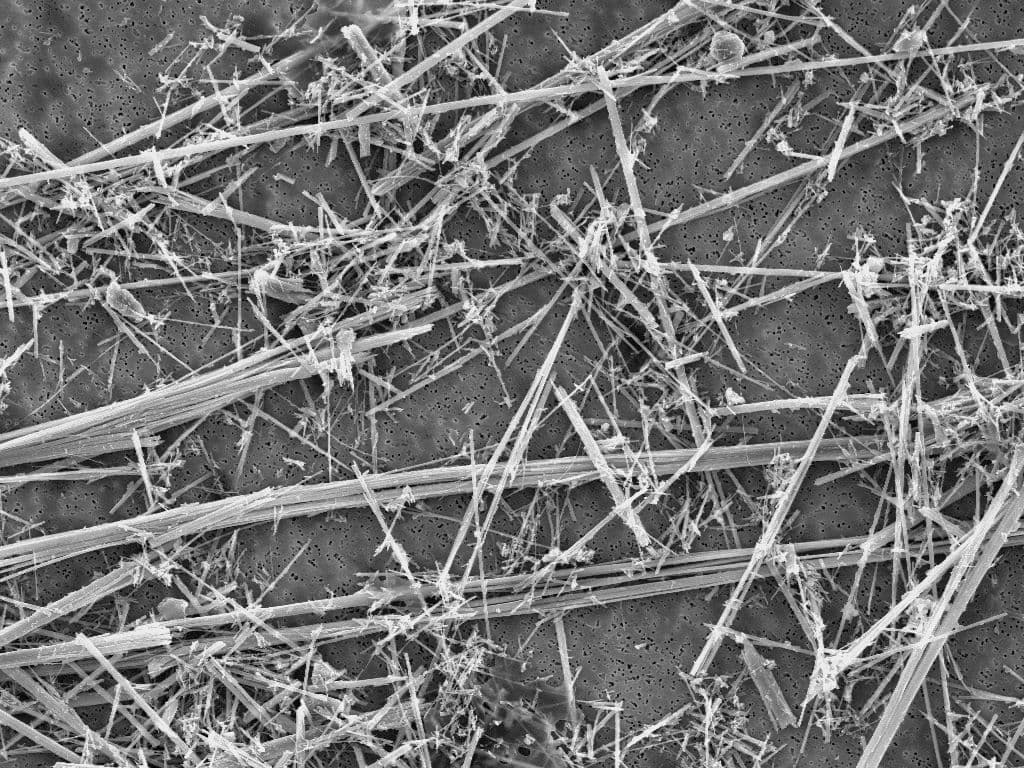
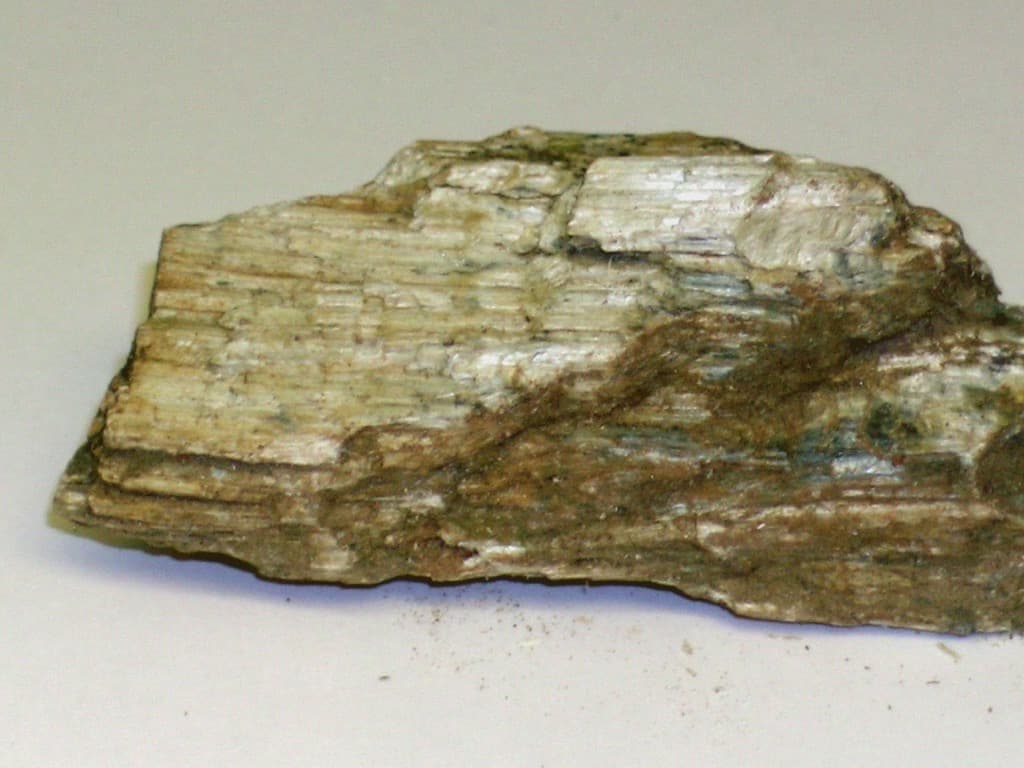
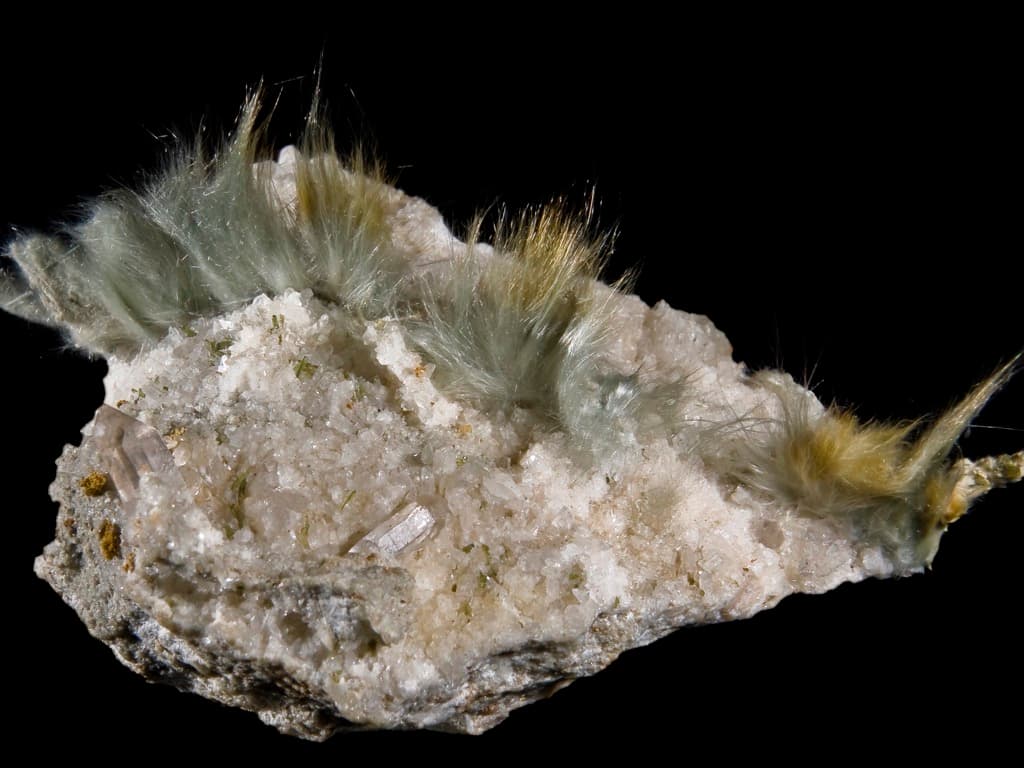
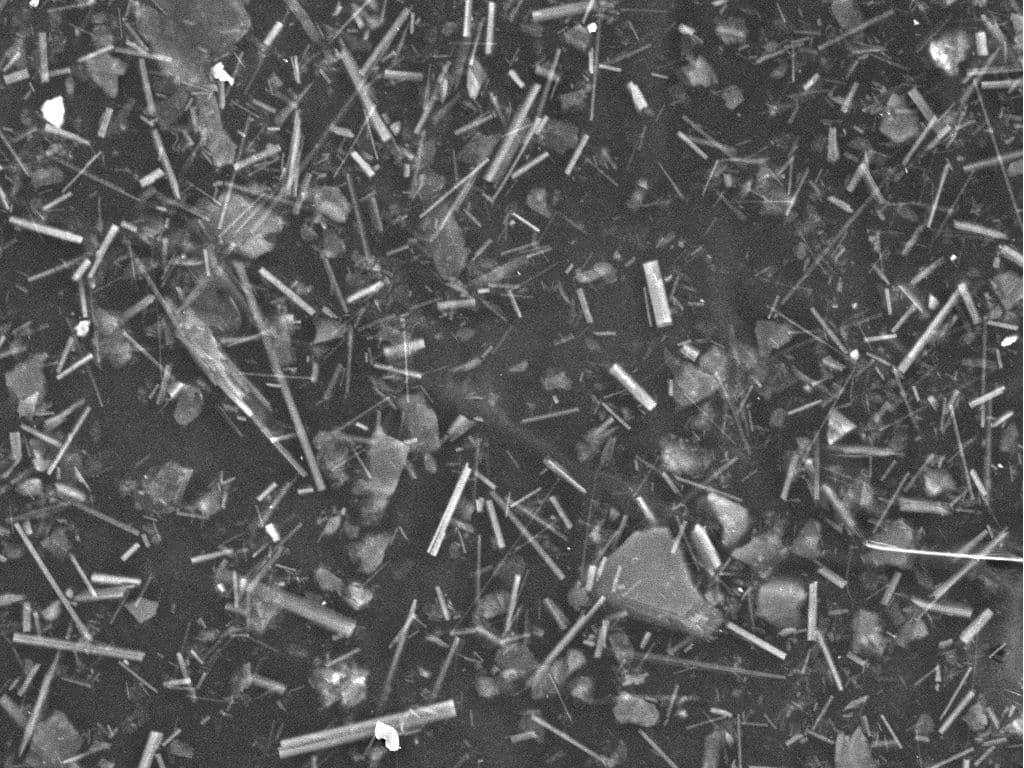
All six types of asbestos are regulated as carcinogens in the United States. They fall into two mineral families: serpentine and amphibole.
| Type | Family | Common Uses | Notes |
|---|---|---|---|
| Chrysotile (white asbestos) | Serpentine | Insulation, roofing, brake linings, cement products | Most commonly used type historically, accounts for most U.S. asbestos exposure |
| Amosite (brown asbestos) | Amphibole | Insulation board, ceiling tiles, pipe insulation | Considered more hazardous than chrysotile due to fiber shape |
| Crocidolite (blue asbestos) | Amphibole | Insulation, cement, some spray-applied coatings | Considered the most hazardous type; strongly linked to mesothelioma |
| Tremolite | Amphibole | Historically found in talc, vermiculite, some paints and sealants | Common contaminant in talc deposits |
| Actinolite | Amphibole | Insulation, some paints and sealants | Less commercially used but still hazardous |
| Anthophyllite | Amphibole | Historically found in some talc and vermiculite deposits | Less common; also a talc contaminant |
Connecticut's major industrial and shipbuilding facilities, including Electric Boat, Pratt & Whitney, and Sikorsky, used multiple types of asbestos across different applications, from pipe insulation to brake components to fireproofing materials. See our full list of Connecticut asbestos exposure sites for facility-specific detail.


Talc and Asbestos Contamination
Talc is a naturally occurring mineral mined from the earth, and it is sometimes found in close proximity to asbestos deposits, particularly tremolite and anthophyllite. When talc is mined near these deposits, the resulting talc products can become contaminated with asbestos fibers unless carefully tested and processed.
Talc has been used for decades in a wide range of consumer and industrial products, including cosmetic talcum powder, baby powder, and other personal care products. For much of that history, testing standards for asbestos contamination in talc were inconsistent or nonexistent.
Individuals who used talc-based products regularly over many years, and were later diagnosed with mesothelioma or ovarian cancer, may have grounds for a legal claim if the talc they used was contaminated with asbestos. This is a distinct and separate legal question from traditional workplace asbestos exposure, and is currently the subject of significant national litigation.
How This Affects Your Claim
Identifying the specific type of asbestos you were exposed to, and the source of that exposure, whether an industrial worksite, military service, or a consumer product, is an important early step in any asbestos-related claim. Different exposure sources can point to different legal pathways, including claims against product manufacturers, workplace-related asbestos trust funds, or both.
Connecticut's mesothelioma claims generally must be filed within 3 years of diagnosis. See our full Connecticut personal injury statute of limitations guide for more detail on deadlines by case type.
Frequently Asked Questions
Is one type of asbestos more dangerous than others?+−
All six types are classified as carcinogens, but amphibole types (amosite, crocidolite, tremolite, actinolite, anthophyllite) are generally considered more hazardous than chrysotile due to the shape and durability of their fibers, which can make them harder for the body to clear once inhaled.
How do I know if I was exposed to asbestos-contaminated talc?+−
If you used talcum powder, baby powder, or similar talc-based products regularly over a period of years, particularly products manufactured before the 1990s, and have since been diagnosed with mesothelioma or ovarian cancer, it's worth discussing your product use history with an attorney experienced in this area.
Can I file both a workplace exposure claim and a talc product claim?+−
It's possible to have exposure from multiple sources. An attorney can help evaluate your full exposure history, workplace, military, and consumer product use, to identify every potential source of compensation.
Does the type of asbestos affect the statute of limitations?+−
No. Connecticut's statute of limitations for mesothelioma claims is based on the date of diagnosis, not the type of asbestos or the source of exposure. See our statute of limitations guide for more detail.
Contact Jazlowiecki & Jazlowiecki LLC — Free Case Evaluation
If you or a family member has been diagnosed with mesothelioma or another asbestos-related illness, whether from workplace exposure or talc-based products, contact us today for a free, no-obligation case evaluation.
Call: (860) 589-8000 — available 24/7
Email: Info@Jazlowiecki.com
No fee unless we win.